Another day, another colossal earnings print from Tether, the world’s largest stablecoin issuer. The company recently released its latest “attestation,” validated by BDO under ISAE 3000 standards. Here’s the LINK for those who love reading attestation reports!
In summary, the report shows Tether has quietly grown into a juggernaut. Tether holds $149.3 billion in assets, including $121 billion in treasury bills, cash equivalents and short-term deposits. What’s more, Tether generated $852 million in net profit last quarter (after paying out dividends). It also holds a surplus of excess reserves totaling nearly $6 billion and is investing in Bitcoin and launching new initiatives, including Tether AI (more on that later in the newsletter).
Now, the company is turning its focus to the U.S. after years of operating primarily overseas. According to the company, the new token will operate under U.S. oversight. Underscoring this point, CEO Paolo Ardoino has reportedly engaged with U.S. lawmakers, including Senator Bill Hagerty, to conform to proposed stablecoin legislation.
As a reminder, stablecoins are digital tokens backed 1:1 by fiat reserves, primarily denominated in U.S. dollars. They circulate over open blockchain networks, enabling instant, low-cost settlement and global access to dollar liquidity.
But beyond enabling digital payments, they have become significant net purchasers of U.S. Treasuries.
Tether’s foray into the U.S. is not only a signal of crypto’s rehabilitation in the eyes of the U.S. government, but it is also a sign stablecoins could become strategic financial infrastructure for the U.S. – if Congress can pass legislation that would accelerate their adoption by consumer and business alike.
Those efforts suffered a setback when a group of Democratic lawmakers who had previously backed Republican-sponsored stablecoin legislation, known as the GENIUS Act, pulled their support (for now), casting some doubt over the law getting passed quickly. For now, this appears to be a speed bump on the road to greater regulatory clarity.
People close to the issue tell me that Trump’s brazen attempts to enrich himself using crypto have given Democrats, and some Republicans, pause. We have long maintained that these attempts by the President to profit from crypto actually undermine legitimate efforts to pass pro-crypto laws.
The timing is important here. We’ve previously discussed how traditional foreign buyers of U.S. government debt — Japanese pension funds, European mutuals, and even central banks — may be starting to pull back. If these long-standing buyers step away, the question becomes: Who will finance America’s growing fiscal needs?
Stablecoins will be part of the answer- just ask Paul Ryan or Scott Bessent, who have been vocal proponents.
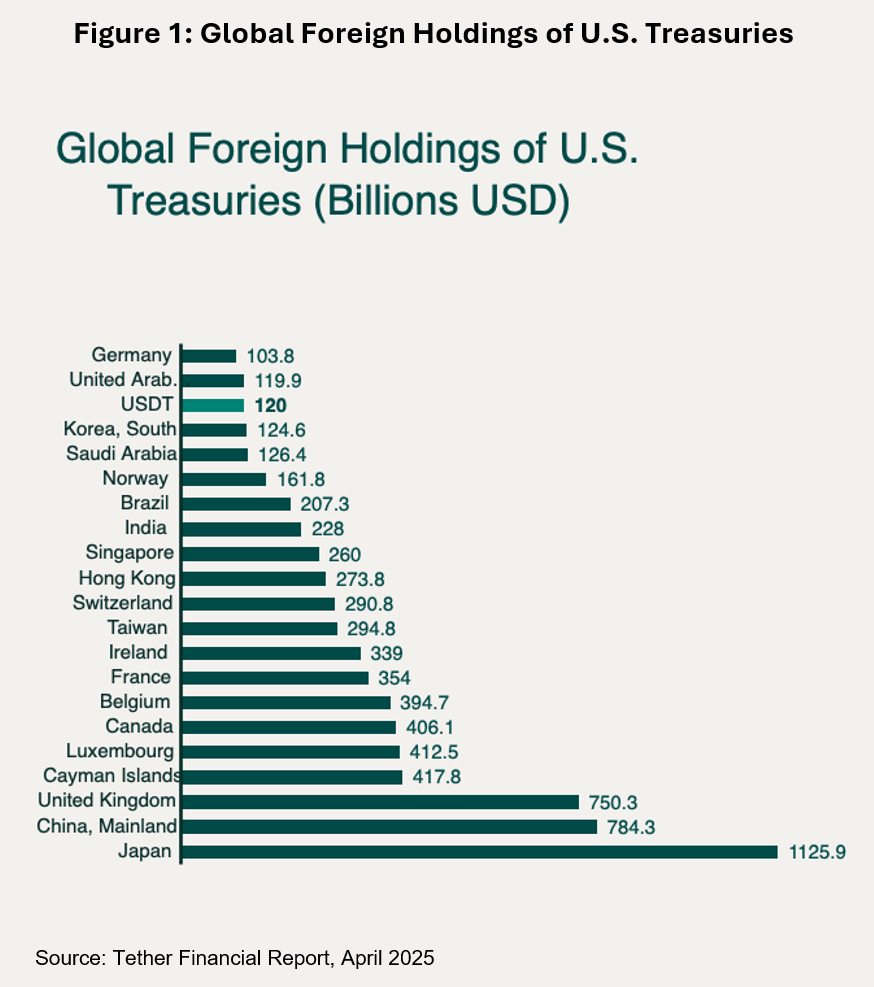
In fact, blockchain-based stablecoins are now among the top holders of U.S. government debt — exceeding countries like Germany and Australia — and growing quickly. According to Tether’s Q1 2025 report, nearly 82% of its reserves are held in U.S. Treasury securities, repos, and money market funds with indirect exposure to Treasuries.

















 May 8, 2025