Digital Asset Digest Newsletter
Print/PDF Print/PDF

Tether Crushes Earnings, Announces Return to the U.S. and Launches AI Venture

Tether Crushes Earnings, Announces Return to the U.S. and Launches AI Venture
PRICE SNAPSHOT
(8 Day Change as of May 09, 2025 10:35AM ET)
Bitcoin Price: $103,472  6.79%
DeFi Total-Value-Locked: $112.3B 10.53%
Ethereum Price: $2,357  28.38%
Crypto Market Cap: $3.28T 8.97%
Bitcoin Range: $93,438 - $103,837
TKN.U Close: $20.76 (as at May 08, 2025)
Ethereum Range: $1,765 - $2,473
TKN.U NAV: $20.77
Bitcoin Dominance: 62.70% 1.72%
TKN.U Discount: 0.05%
STORY OF THE WEEK
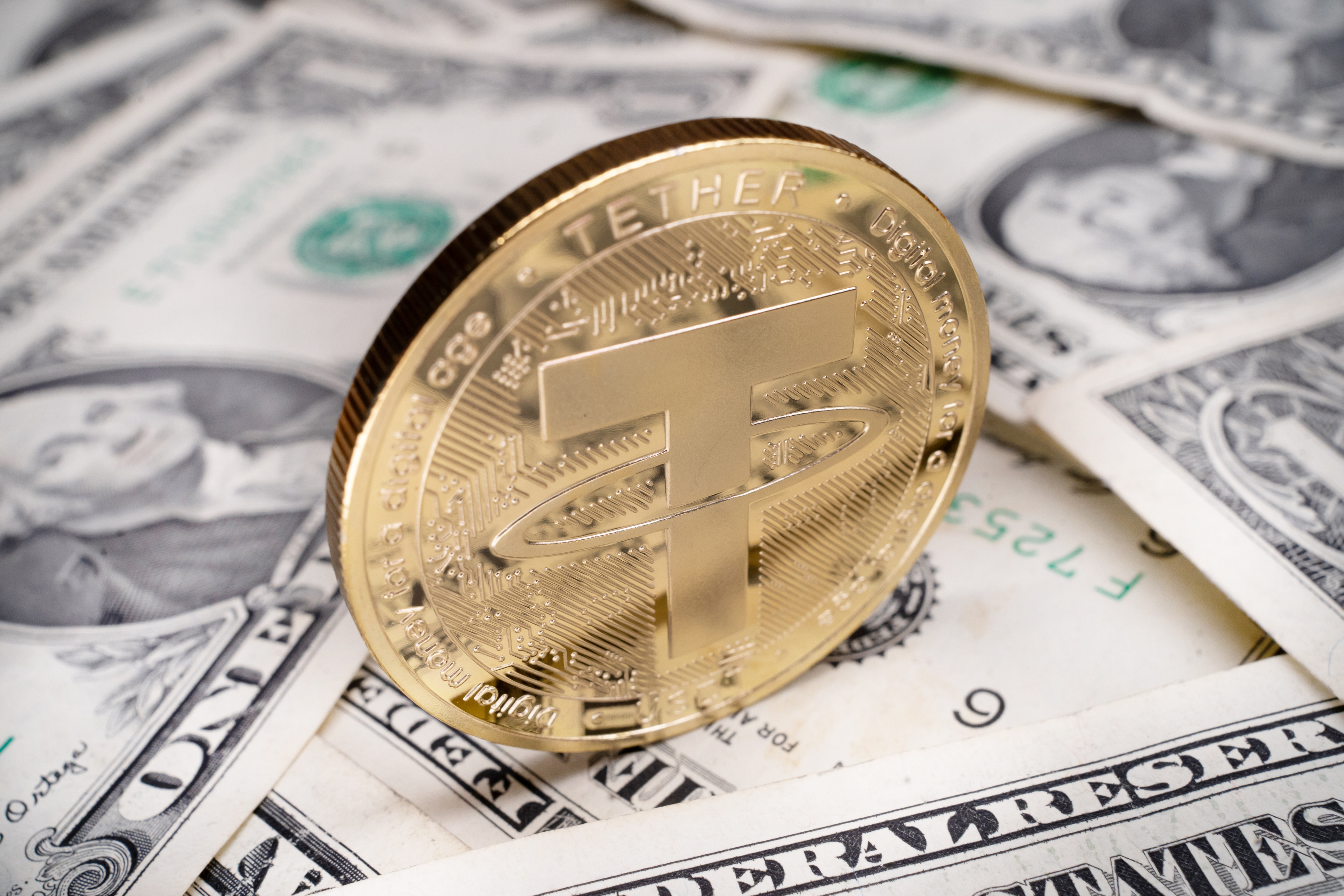
iStock-1402102628.jpg
Tether Crushes Earnings, Announces Return to the U.S. and Launches AI Venture
By: Alex TapscottManaging Director of the Ninepoint Digital Asset Group, a division of Ninepoint Partners, and Portfolio Manager of the Ninepoint Crypto and AI Leaders ETF at Ninepoint Partners

Another day, another colossal earnings print from Tether, the world’s largest stablecoin issuer. The company recently released its latest attestation,validated by BDO under ISAE 3000 standards. Here’s the LINK for those who love reading attestation reports!

In summary, the report shows Tether has quietly grown into a juggernaut. Tether holds $149.3 billion in assets, including $121 billion in treasury bills, cash equivalents and short-term deposits. What’s more, Tether generated $852 million in net profit last quarter (after paying out dividends). It also holds a surplus of excess reserves totaling nearly $6 billion and is investing in Bitcoin and launching new initiatives, including Tether AI (more on that later in the newsletter).

Now, the company is turning its focus to the U.S. after years of operating primarily overseas. According to the company, the new token will operate under U.S. oversight. Underscoring this point, CEO Paolo Ardoino has reportedly engaged with U.S. lawmakers, including Senator Bill Hagerty, to conform to proposed stablecoin legislation.

As a reminder, stablecoins are digital tokens backed 1:1 by fiat reserves, primarily denominated in U.S. dollars. They circulate over open blockchain networks, enabling instant, low-cost settlement and global access to dollar liquidity.

But beyond enabling digital payments, they have become significant net purchasers of U.S. Treasuries.

Tether’s foray into the U.S. is not only a signal of crypto’s rehabilitation in the eyes of the U.S. government, but it is also a sign stablecoins could become strategic financial infrastructure for the U.S. – if Congress can pass legislation that would accelerate their adoption by consumer and business alike.

Those efforts suffered a setback when a group of Democratic lawmakers who had previously backed Republican-sponsored stablecoin legislation, known as the GENIUS Act, pulled their support (for now), casting some doubt over the law getting passed quickly. For now, this appears to be a speed bump on the road to greater regulatory clarity.

People close to the issue tell me that Trump’s brazen attempts to enrich himself using crypto have given Democrats, and some Republicans, pause. We have long maintained that these attempts by the President to profit from crypto actually undermine legitimate efforts to pass pro-crypto laws.

The timing is important here. We’ve previously discussed how traditional foreign buyers of U.S. government debt — Japanese pension funds, European mutuals, and even central banks — may be starting to pull back. If these long-standing buyers step away, the question becomes: Who will finance America’s growing fiscal needs?

Stablecoins will be part of the answer- just ask Paul Ryan or Scott Bessent, who have been vocal proponents.

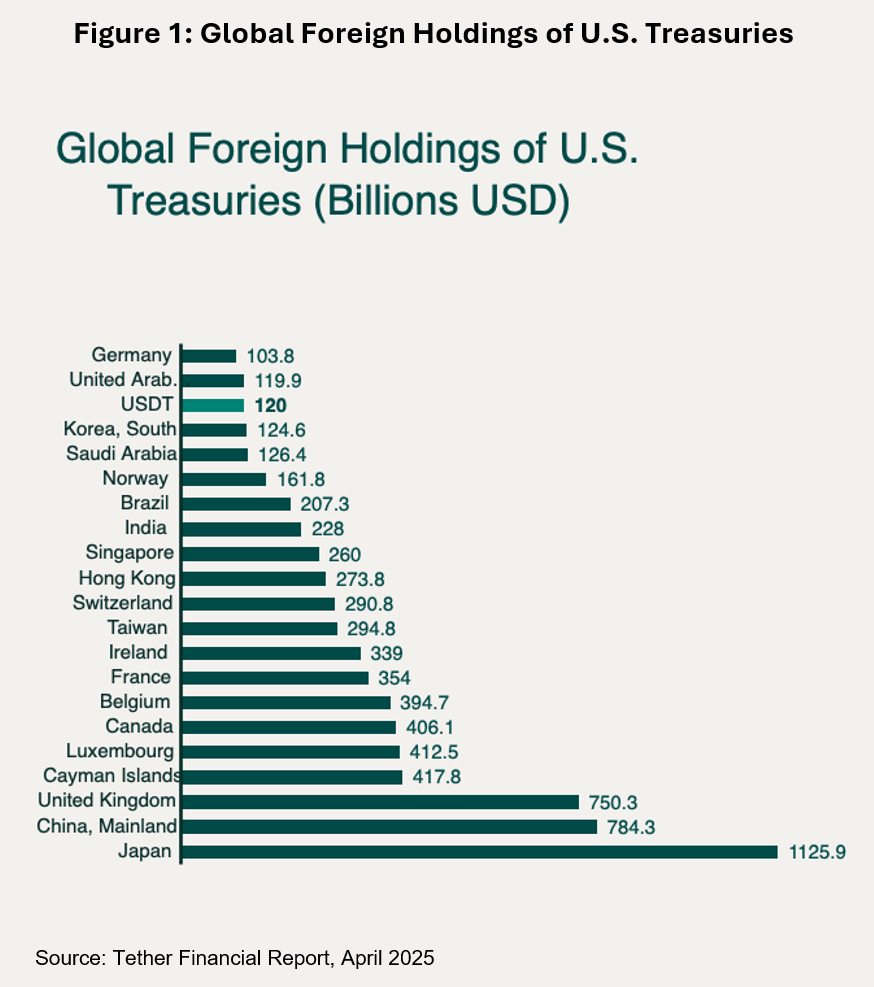
In fact, blockchain-based stablecoins are now among the top holders of U.S. government debt  exceeding countries like Germany and Australia — and growing quickly. According to Tether’s Q1 2025 report, nearly 82% of its reserves are held in U.S. Treasury securities, repos, and money market funds with indirect exposure to Treasuries.

2025-05-08_15-45-01.png

Could stablecoins also emerge as a tool of monetary diplomacy — a way to project the U.S. dollar globally without requiring physical banks or correspondent networks? Today, billions of people lack reliable access to the dollar, not because they don’t want it, but because legacy infrastructure can’t reach them. Stablecoins could fix that. With only a smartphone, anyone can store, send, and settle in digital dollars in real-time.

After years in borderline exile, Tether’s move into North America may come just as regulatory clarity and increase interoperability with U.S.-based financial institutions grows demand for stablecoins and expertise in this area. And if stablecoin issuers like Tether are embraced as legitimate financial actors, they could play a much larger role in the financial system.

2.png

This week, Tether also announced that it was venturing into the world of AI. Tether AI, according to CEO Paolo Ardoino, is a “fully open-source AI runtime, capable of adapting and evolving on any hardware and device, no API keys, no central point of failure, fully modular and composable, WDK-infused to enable USDT and Bitcoin payments.”

That’s quite a mouthful. And so far, the details are limited. But in spirit, we believe that AI and crypto are intuitively related.

For example, in January we wrote about how AI ‘agents’ like chatbots, virtual assistants and trading bots, use cryptoassets like a digital bank account.

This makes intuitive sense and could be the most bullish driver of all for crypto. AI agents may outnumber humans soon, but unlike people they can’t walk into a bank and open a checking account, start a company or enter into a legal agreement. The only way for them to do transactions, move and store value and form binding business relationships is using cryptoassets and the on-chain toolkit of smart contracts and DAOs.

So, an AI system where people and agents alike can transact instantly and peer to peer with USDT and Bitcoin feels directionally correct, even if the details are murky for now. We’ll be keeping an eye on that one.

THIS WEEK ON DEFI DECODED
Defi Decoded Episode194.jpg
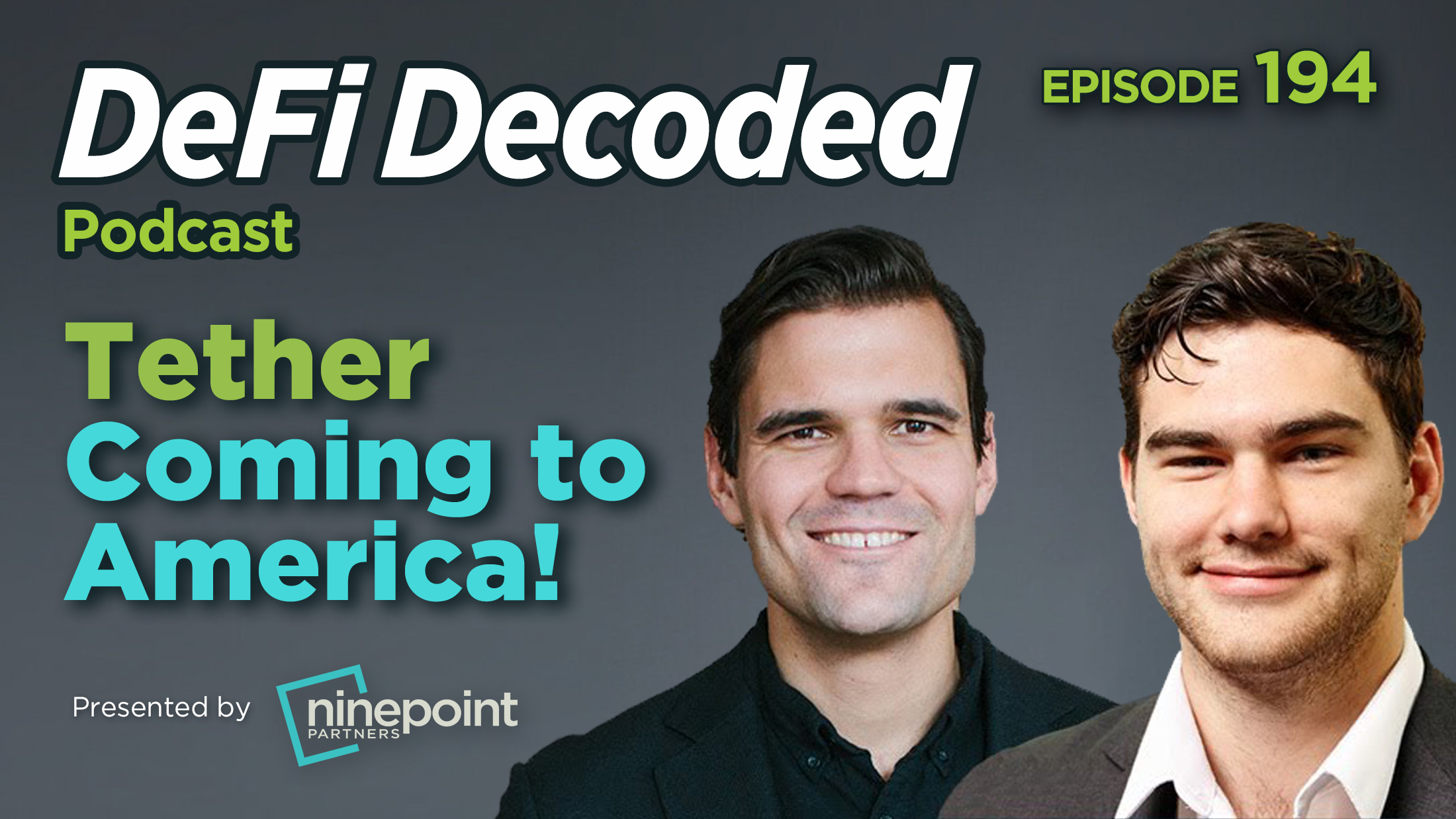
Tether - Coming to America!
Join Alex Tapscott and Andrew Young as they decode the world of Web3. In this episode of DeFi Decoded, Alex and Andrew discuss the current state of the crypto market, focusing on the role of stablecoins, particularly Tether, in the treasury market. They explore the implications of Tether's growth and its potential to act as a significant buyer of U.S. government debt. The conversation also delves into Ethereum's upcoming upgrade, market valuations of private vs. public companies, and the future of crypto narratives.
COMMENTARY & INSIGHTS