
ADVISOR USE ONLY
Price vs Fundamentals
Fundamentals matter, but ultimately price is what is important. Fundamentals are the foundation, but the market is also a leading indicator, in the business of anticipating the fundamentals of the future, which means price can sometimes tell us more about what's coming than the numbers themselves. That relationship has been on full display this earnings season: results have been exceptionally strong, with S&P earnings growth on pace for a stunning 28%, even excluding one-time investment markup gains from Google and Amazon. Yet the market's reward for beats has been lackluster at best — it was actually negative in crowded sectors like Information Technology and Communication Services — while the penalty for misses has been far more severe than history would suggest.
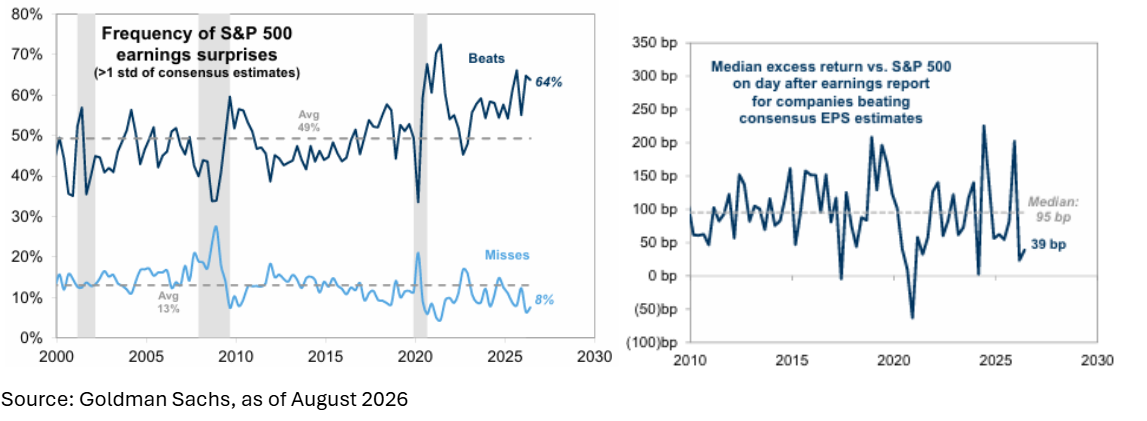
Nowhere has that disconnect been more evident than in the momentum selloff that hit markets in July.
Dog Days of Summer
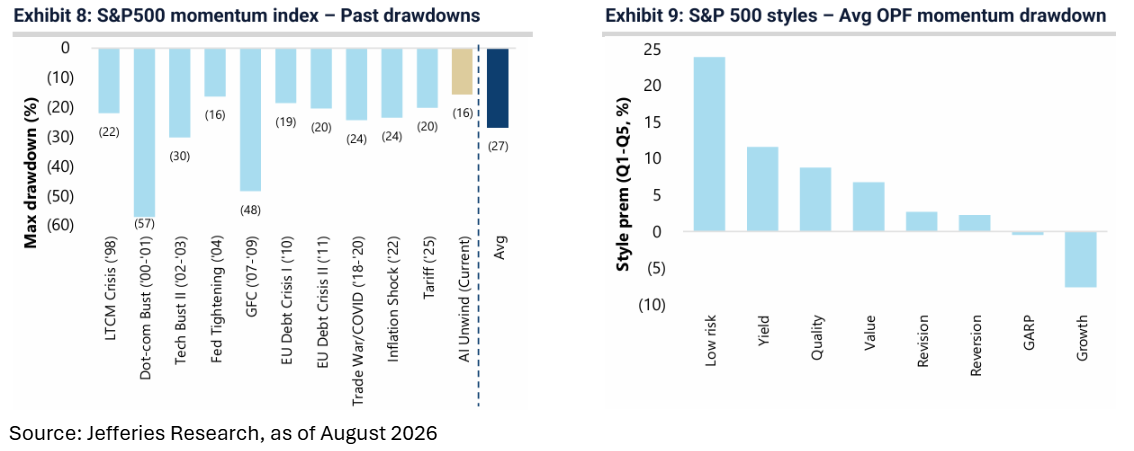
July was a challenging month, driven by the momentum selloff that hit markets during the period. The drawdown, while not quite in line with historical large-scale unwinds, moved quickly. It wasn't contained to semiconductors either; growth broadly was one of the month's worst-performing factors.
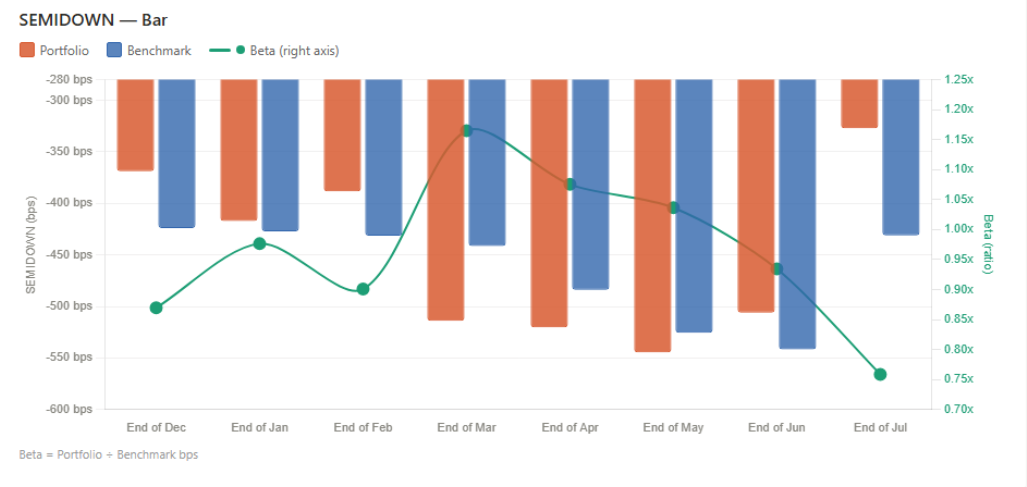
We had been trimming our semis and AI capex-related exposure heading into July, and Figure 3 shows the extent of that shift: from March through May, the portfolio was more sensitive than the broader market to a semiconductor selloff, but by the end of June we had brought that sensitivity down. Our beta to a "semis down 10%" scenario followed the same path, and we reduced it further still in early July. Even so, the moves in our remaining, smaller weights still detracted from results.
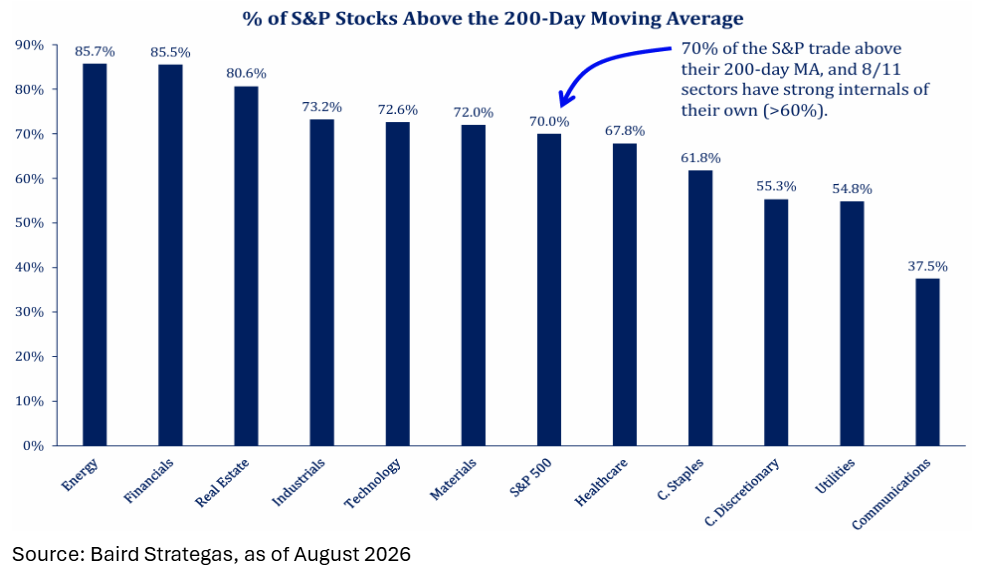
These changes reflect a broader shift we've been making toward other areas of leadership. With 70% of S&P 500 stocks now trading above their 200-day moving average, market participation has been broadening, not just within Technology, but into cyclicals, Financials, Health Care, and beyond. That breadth shows up at the sector level too: 8 of 11 sectors currently have at least 60% of their constituents in uptrends and above their 200-day moving averages, a signal that the opportunity set itself may be widening. We have been seeking to participate in these opportunities.
One Win At a Time
In 1989, the Toronto Blue Jays started their season slowly, before the team hired a first-time skipper named Cito Gaston. When asked, months later, how he'd steered the club back into a division race, Gaston's answer wasn't complicated: the job is to stay relaxed and focus on what's in front of you. Toronto went on to win the division on the second-to-last day of the season.
We try to apply the same discipline to the portfolio. A white sheet of paper approach means isolating our decisions to what's in front of us today, rather than anchoring to the past. Whether we've outperformed or underperformed in a given stretch, the right question doesn't change: would we buy each stock in the portfolio today, at today's price, knowing what we know now? That's the question we ask about every name in the portfolio, in every environment — and it's the one we're asking now.
Have a great week!
Tony, Sam & JLO