
The stock market has held up well this year despite a growing set of risks. This includes rapidly rising yields - the U.S. 10-year Treasury yield rose 53 basis points in September alone and 82 basis points over the third quarter as a whole. Higher yields make borrowing more expensive and make safer investments like bonds more attractive compared with stocks, which is usually a headwind for share prices. Yet stocks have largely looked past it, and a commonly cited reason is the strength of corporate profits.
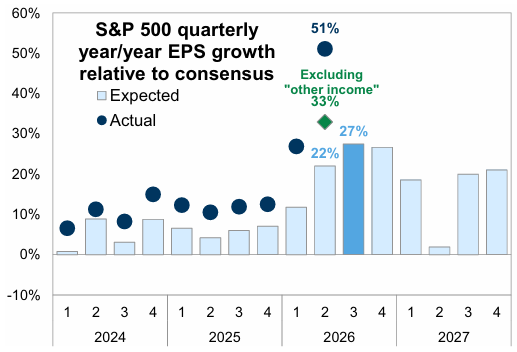
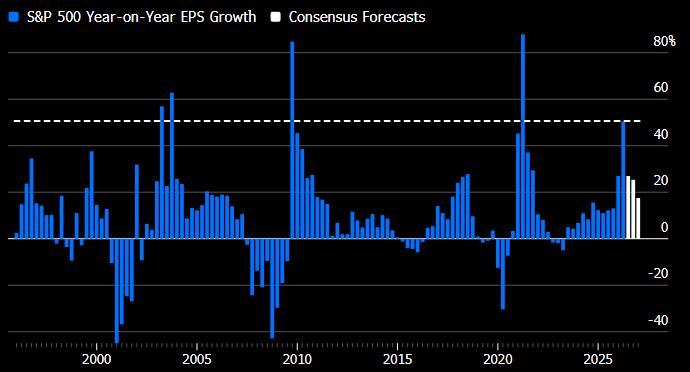
With profits carrying the load, the Q3 earnings season that kicks off this week carries added significance. Expectations are for another very strong round of results, with analysts forecasting 27% earnings growth for the quarter, down from 33% in Q2 (excluding one-time gains) but still exceptional. Growth at this pace is typically seen only when companies are bouncing back from a recession-driven slump, not in the middle of an economic cycle, as is the case today. Moreover, much of the gain is being driven by AI-related companies. Beneficiaries of AI spending account for more than half of expected earnings growth, and roughly one-third of the total comes from just two companies, Nvidia and Micron.
Figure 1 – S&P 500 Quarterly Earnings Growth (LHS), Relative to History (RHS)
Here is what we will be watching more closely for this earnings season:
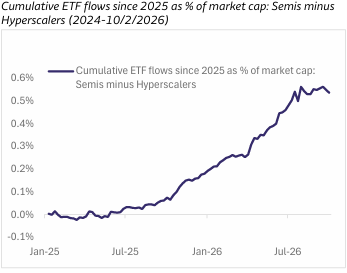
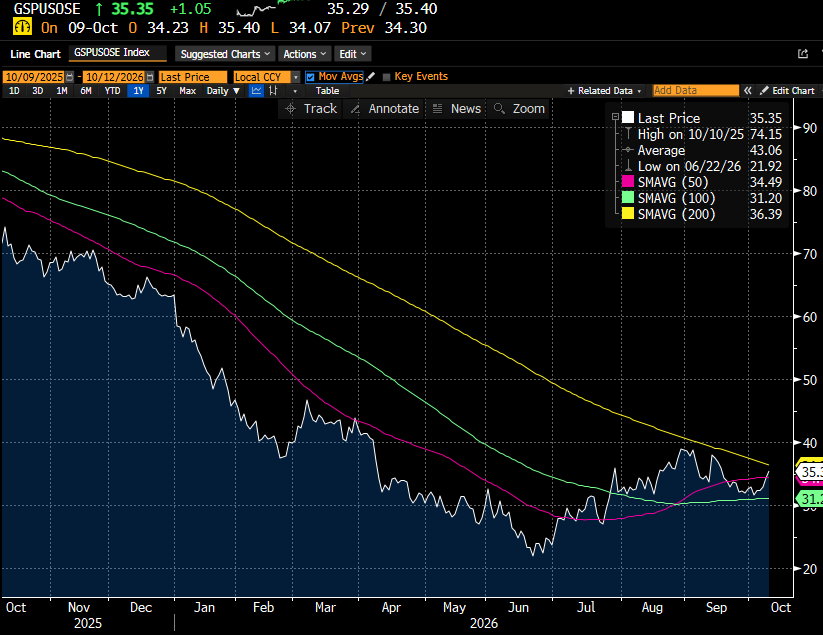
- Great Results vs. Great Expectations - We will be watching whether the great results investors expect actually live up to the great expectations already priced in. Recent reports from Samsung and Micron show how high the bar has become for tech: earnings were very strong, but still fell short of what investors were hoping for. Nvidia keeps posting standout results and has guided to roughly 70% growth in fiscal 2028, a figure limited only by how much it can supply. Even so, the stock trades at just 15 times expected 2028 earnings, which is not demanding. Semiconductor and AI-spending beneficiaries have continued to deliver, but expectations have risen right alongside them, and tech is now forecast to grow earnings 65% this quarter. Semiconductors also look like a more crowded trade, with money flowing steadily into the sector all year. At the same time, the group has begun to lose market leadership in the third quarter as a mix of risks has built up: questions about how fast AI models keep advancing, falling prices for AI usage, and local moratoriums on new data centers. Parts of software, meanwhile, have started to show signs of leadership. On the other side of the ledger, the bar is lower for Health Care, where earnings growth forecasts have been revised down in recent months.
Figure 2 – Semi ETF Flows (LHS), Semis vs Software Pair (RHS)
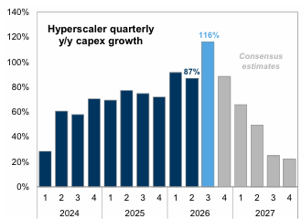
- AI Spending vs. Monetization - Another thing we will be watching is whether the money going into AI is starting to pay off. Hyperscaler spending is expected to accelerate again - analysts forecast capital spending to rise 116% from a year earlier in the third quarter, up from 87% growth in the second quarter. Spending next year is currently expected to reach roughly $1.1 trillion, and it could come in higher. That said, the pace of growth is likely to slow in coming quarters.
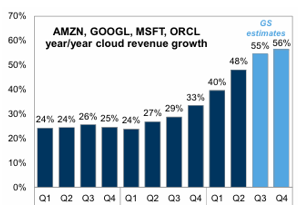
The bigger question is what the spending is earning. Last quarter, the hyperscalers reported faster growth in cloud revenue and large backlogs of customer commitments, both signs that their investments were beginning to generate revenue. We expect evidence of those returns to be a central focus again this season. Continued signs that AI spending is turning into revenue matter for two reasons: they support the performance of the hyperscalers themselves, and they shape how much more spending is likely to follow. The monetization story also depends on who is doing the buying - a large share of the hyperscalers’ backlogs comes from the leading AI developers, often called frontier labs, which have committed to buy enormous amounts of computing power. The key question is whether those labs will generate enough revenue to pay for what they have promised to spend.
Figure 3 – Hyperscaler Capex (LHS) vs. Cloud Revenue Growth (RHS)
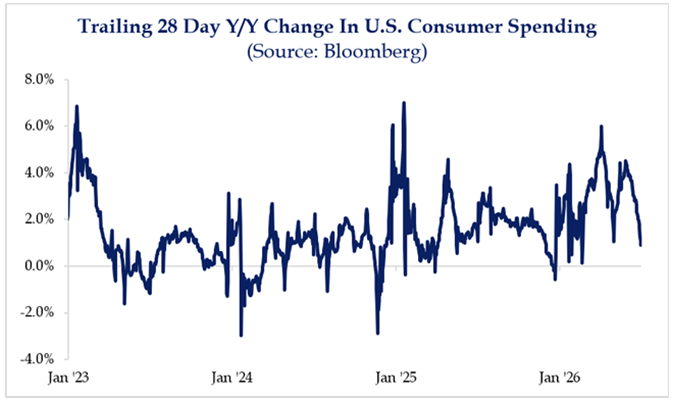
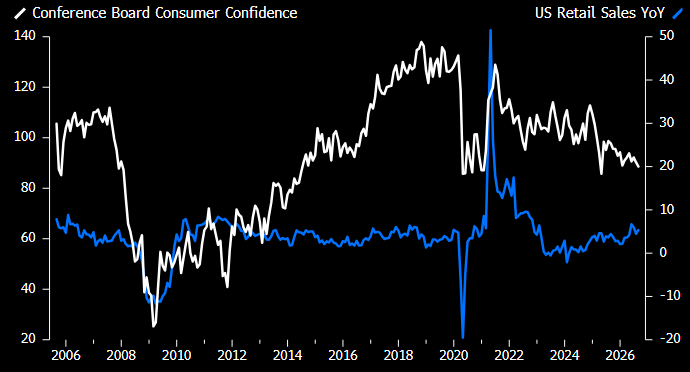
- The Consumer - A third thing we will be watching is the health of the consumer, where the bar for results is fairly low. Analysts expect tepid earnings growth this quarter from the Consumer Discretionary and Consumer Staples sectors. Consumers got a lift earlier this year from tax refunds under the One Big Beautiful Bill, which helped offset the squeeze from higher energy prices. That boost has now run its course, and affordability remains a growing problem for many households. The job market appears to be holding up so far, which is a key support for spending. However, recent data points to a notable slowdown in both consumer confidence and how much consumers are spending. We will be listening closely to what retailers, restaurants and consumer brands say about demand, particularly whether lower-income shoppers are pulling back.
Figure 4 – US Consumer Spending and Confidence Recently Weakening
Conclusion - Top Line vs. Depth Scoring
Markets are a leading indicator. As Wayne Gretzky liked to say, the idea is to skate to where the puck is going, not where it has been. Stock prices work the same way, moving on what investors expect earnings to be in the future, not on what companies just reported. That is why a strong quarter does not guarantee a strong market reaction, and why the reports from Samsung and Micron were met with a shrug.
It also helps explain why this has been an unloved bull market. Record profits have pushed prices higher, but the multiples investors are willing to pay for those profits have shrunk, which has cancelled out part of the gain. Rising bond yields and growing economic worries have weighed on valuations and kept them from expanding.
Substantial good news is already in the price, so what moves the market from here is whether earnings can keep growing, and whether more companies can contribute. Right now, much of the scoring is coming from one line, with just two companies producing roughly a third of expected growth. A hockey team can ride its top line for a while, but over a long season it needs depth scoring. For earnings to keep carrying the load, we will be watching for whether the contribution broadens beyond AI.
Have a great week!
Tony, Sam & JLO