
“The Business of America is Business”
“The business of America is business.” Calvin Coolidge said it a century ago, and it describes a country that is, above all, concerned with producing, buying, selling, and profiting. Today it still reads as a fair description of what drives the U.S. economy. There is no shortage of controversy about how America conducts its business right now. Yet through all of it, the engine keeps running - American companies keep finding ways to earn more, invest in new ideas, and adapt faster than their peers anywhere else.
That pattern goes back a long way, from the assembly line to the personal computer, the internet, the smartphone, cloud computing, and now artificial intelligence. Each wave looked uncertain at first, and each eventually showed up as higher productivity, meaning more output for the same amount of work. That is what lifts profits and living standards over time. Corporate profits, not politics, remain the best explanation for why the U.S. is still the most dynamic and innovative economy in the world.
Figure 1 – U.S. Productivity Gains Over Innovation Cycles
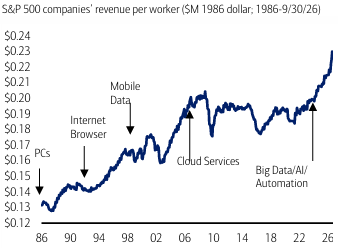
That innovative, profit-driven engine is the thinking behind the Ninepoint American Growth Fund, which we launched last week. The fund takes a high-conviction approach, concentrating on market leaders that stand to benefit from innovation or from the broader macro backdrop. It also raises a question we may well hear: why start a U.S. growth fund now? The answer lies in how the market looks today and where it may be headed:
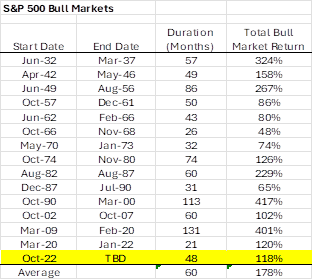
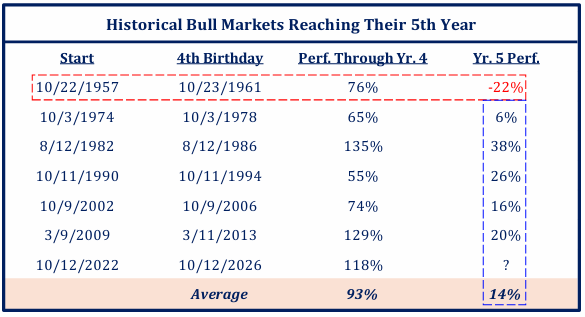
- Current Bull Market Neither Old nor Extreme - Start with the bull market itself, which just celebrated its 4th birthday. Over those four years, the S&P 500 is up 118% from its October 2022 low. That may seem like a lot, but it is a more modest gain than the first four years of the bull markets of the 1980s and the 2010s. It also falls well short of the 178% average gain for all bull markets since the 1930s. In other words, by the standards of history, this rally has been strong but not unusual. It hasn’t been particularly long either. Five of the last seven bull markets continued into a fifth year, and returns in that year were generally solid, averaging 14%.
Figure 2 – S&P 500 Bull Markets
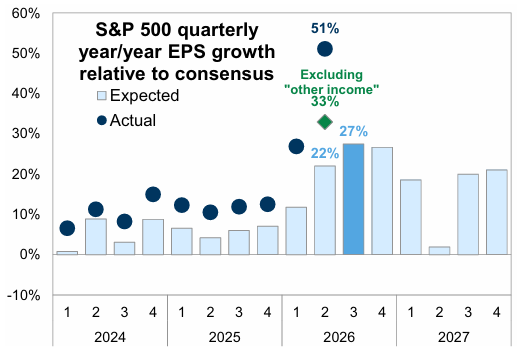
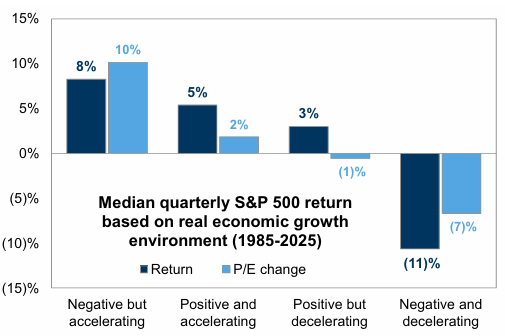
- Earnings Growth is Exceptional (But Potentially Peaking) – When it comes to the most correlated factor with the stock market - earnings are still exceptional. Consensus expects S&P 500 earnings to grow 27% this quarter, a remarkable pace this far into a bull market. It may slow next year, though, as the easier comparisons fade and the pace of growth moves back toward more normal levels. That does not necessarily mean the bull market ends. Historically, periods of positive but decelerating earnings growth have still produced positive returns, just more muted ones, and those returns have been driven more by earnings growth than by rising valuations. There is also a point in favor of growth investing here. When growth becomes scarcer, investors have typically paid more for it, and growth stocks have tended to outperform in slowing-growth environments.
Figure 3 – Exceptional Earnings (LHS), Positive but Decelerating Earnings Performance (RHS)
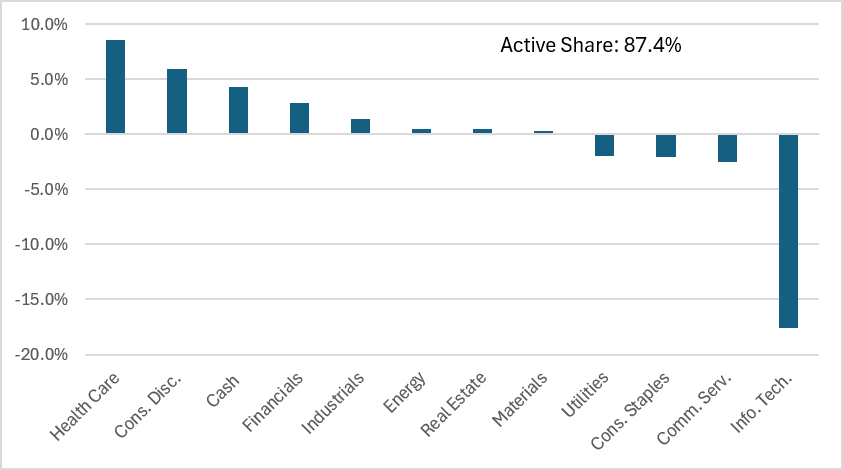
- Therefore, This May Be Where Investors Need Something Different - If earnings growth is peaking, the market’s next leg may look different from the last one. Market leadership is always changing, and we may be at one of those inflection points. The concentration in AI and technology is hard to miss. Technology, together with Meta, Alphabet, and Amazon, now makes up about 50% of the S&P 500. The five largest names in the index, plus Micron and AMD, have accounted for 47% of the index’s return so far this year. Owning the index today means owning a very large bet on one theme. Our portfolio is built differently. With a high active share and a highly differentiated mix of holdings, we aim to generate alpha in a different way, by looking for emerging leadership trends before they become consensus. Today, our largest overweight is in Health Care and our largest underweight is in Technology.
Figure 4 – Ninepoint American Growth Fund – Relative Sector Weights vs. S&P 500
Owning the Business of America, Differently
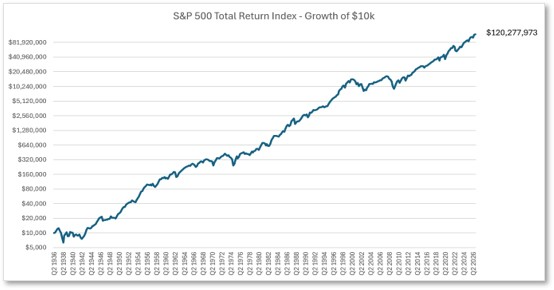
Nearly a century of results shows that when the business of America is business, owning a piece of it pays. A $10,000 investment in the S&P 500 total return index in 1936 would be worth more than $120 million today, through wars, recessions, inflation, and no shortage of controversy. The bull market is only four years old, earnings are still growing at an exceptional pace, and we have yet to fully reap the productivity benefits of the considerable spending to build out AI. But with so much of the market riding on a single theme, the next chapter may reward a different approach. That is why we launched the Ninepoint American Growth Fund: a high-conviction, actively managed way to own the best of American business, wherever the next leaders emerge.
Figure 5 – Growth of $10k in the S&P 500 Total Return Index (since 1936)
Have a great week!
Tony, Sam & JLO


