
“Claude for the Rest of Us”
In the 2008 film Iron Man, Tony Stark doesn't use his computer so much as talk to it. His AI assistant, JARVIS, runs his house, manages his schedule, handles his business and occasionally talks him out of bad decisions. It was a billionaire's fantasy - a tireless digital butler that simply got things done. Nearly two decades later, this fantasy is getting a mass-market release, and without the billionaire price tag.
Its name is Muse. Meta launched its consumer personal agent on September 8, and within weeks it had climbed to the top of both the Apple and Google app stores. Downloads passed 2.8 million in the first two weeks, more than Claude or Gemini managed over the same stretch after their own launches, and global daily users are hitting new highs almost daily.
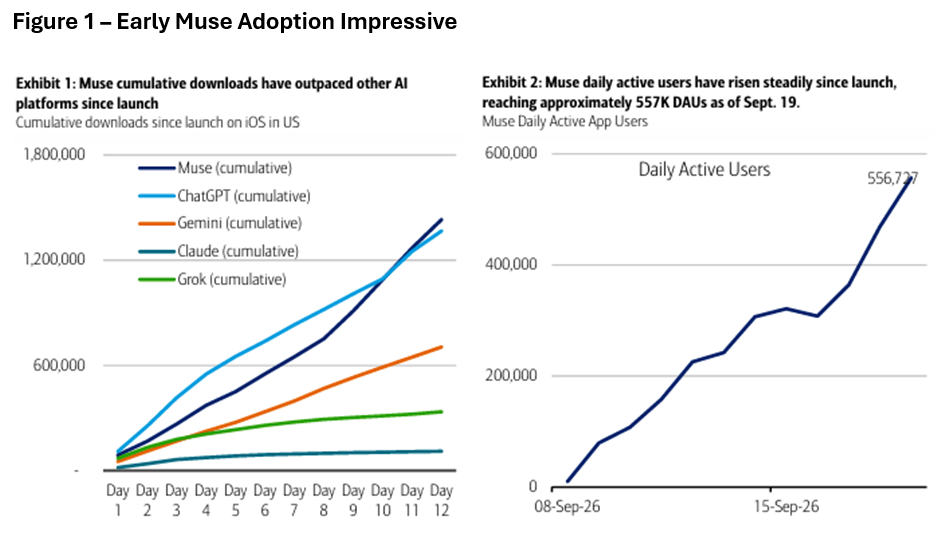
What's the big deal about Muse? Its magic lies in ease of use and sheer reach. Muse puts agentic AI, meaning software that carries out tasks rather than just answering questions, behind an interface simple enough for anyone to use. It also launched with a built-in audience, as some 3.6 billion people use at least one of Meta's apps every day. And the jobs it takes on are the ones people put off: shopping around for a lower insurance bill, cancelling subscriptions they forgot they had, scheduling meetings, even negotiating purchases on their behalf. Meta has put trust and safety front and center, a sensible choice for a product that can handle people's money and calendars, and is also offering a generous free tier.
Cancel Culture
One of the major implications of Muse’s adoption may be less about what it can do and more about what it stops people from putting up with. A surprising amount of corporate profit depends on customers being busy, distracted or simply unwilling to sit on hold. Subscriptions renew because cancelling is a chore, insurance policies roll over because shopping around takes an afternoon, and cash sits in low-interest accounts because moving it is a hassle. An agent has none of these problems. It will wait on hold indefinitely, is unmoved by a retention script, and will happily re-shop your car insurance every year.
Investors have started sorting the winners from the losers accordingly. Businesses whose moats are built on inertia look exposed: subscription services people keep paying for out of habit, comparison and booking sites that take a cut for information an agent can now gather itself, and brokerages that earn wide spreads on idle client cash. On the other side, the winning companies may be those that give agents the tools to do their jobs. These include the payment networks that process the transactions, e-commerce platforms that have partnered with Muse on checkout, and the web infrastructure firms that allow agents to communicate with merchants.
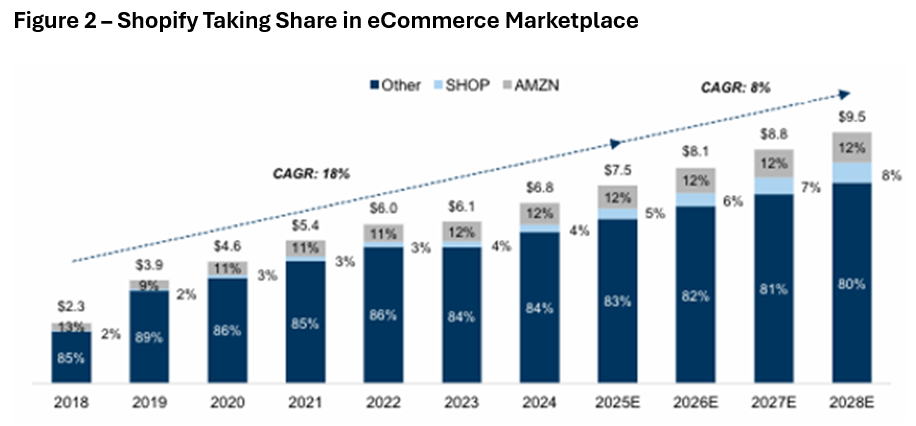
Shopify offers a good example of a company leaning into the change. While Amazon has chosen to block Muse from its site, Shopify has opened the door, announcing a partnership that lets Muse browse products from its merchants and pay for them directly through Shop Pay. Amazon's decision to wall off its data only underlines how valuable good shopping data has become, and Shopify has plenty of it. Its Catalog gives AI platforms, including Meta, OpenAI and Google, live information on products, prices and stock levels directly from its merchants, rather than the stale details an agent might scrape from a website. That matters for Shopify's merchants, too. A shopper asking Muse for a coffee grinder under $200 isn't steered by whoever spends the most on advertising; the agent simply looks for the best match, wherever it's sold. That could open up opportunity for independent brands, many of whom already run on Shopify. And because Shopify earns money on payments and checkout, not just storefronts, it can profit from agent-driven sales even when the shopper never visits a Shopify website.
Less obvious, but no less interesting, is Twilio, the company whose software lets businesses send texts, make calls, and handle messages at scale. Agents don't just shop; they communicate, and they do so tirelessly. Twilio's ConversationRelay establishes full-duplex, low-latency audio streams so that voice agents can talk to humans naturally, eliminating the awkward "AI pause" common in traditional telephony that tips off consumers that they are speaking to a machine. Twilio enables agents to use a phone the way a person does—calling a hotel to change a booking, texting a utility to dispute a bill, or messaging an airline to ask for a fee waiver. A person might skip half of these chores; an agent won't. Each completed task also triggers a trail of confirmations, delivery updates, and reminders, all of which add to the volume of messages flowing through Twilio's network.
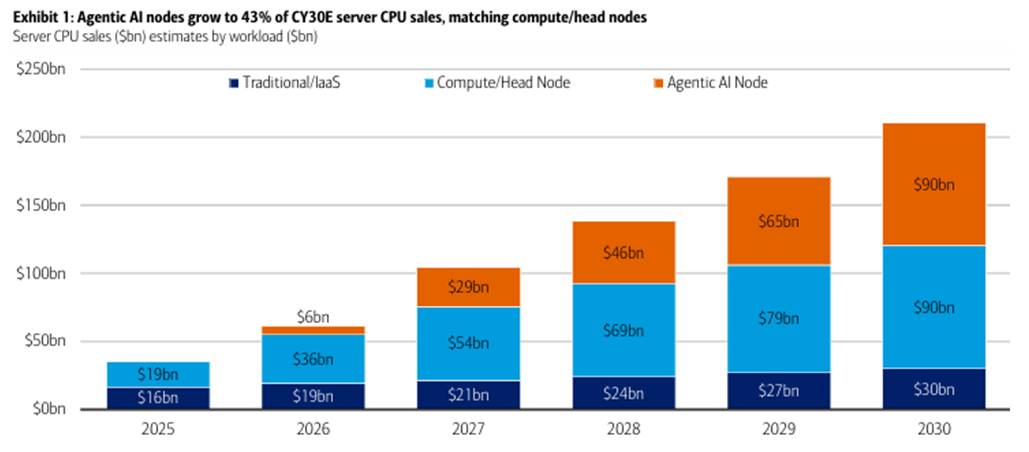
On the hardware side, the humble CPU, the general-purpose chip at the heart of every computer, is positioned to be a winner. For the past few years, the AI boom has belonged to GPUs, the specialized chips designed for heavy model training. But autonomous consumer agents like Meta's Muse change the equation. While a chatbot mostly thinks in isolation, an agent acts - running continuous background loops, browsing live websites, orchestrating multi-step logic, and managing real-time API calls. This heavy lifting falls squarely on the CPU. Muse illustrates this shift vividly: every user gets their own private virtual environment in the cloud, complete with dedicated processing and memory. To support millions of these 24/7 background agents, the required data center CPU-to-GPU ratios are expanding dramatically. Bank of America expects the market for data-center CPUs to more than triple, surging from about $61 Bill to over $200 Bill by 2030, and Arm Holdings (ARM) is uniquely positioned to capture this demand. Arm's architecture is built for unmatched power efficiency and packs in dense multi-core processing, making it ideally suited for agents that must juggle thousands of concurrent tasks rather than just executing a single linear sequence. Furthermore, Arm’s role in co-developing custom silicon directly with companies like Meta ensures that its designs sit at the very heart of the agentic infrastructure buildout.
Figure 3 – CPU Sales Growth Driven by Agentic AI
First Mover, Not Last Word
Impressive as it is, Muse is unlikely to be the last word on consumer agents. Google, OpenAI and others are almost certainly working on their own versions. We suspect the coming months will show that Muse was simply the one that broke-through to the mainstream, and that the agents following close behind will, together, change how people and companies work, communicate and spend money. None of this is entirely new. AI enthusiasts have been able to do much of it for a while, but it took technical skill, constant tinkering and was hardly something the average person could use out of the box. What has changed is that large, well-funded companies are now taking care of the safety, the infrastructure and the distribution. The result should be a rapid spread of these tools, and with it the steady disappearance of much of the friction.
Sorting out the winners and losers will take months, if not years, and there will be surprises along the way. But we remain confident that the overall effect is positive for the stock market over the long-term, as time and money wasted on hassle get redirected to more productive uses. Tony Stark had to build JARVIS himself. The rest of us, it turns out, just had to wait.
Have a great week!
Tony, Sam & JLO